

Summit-First Framework Five-Part Series: Part 2, Trail Markers
Imagine being asked to change a flat tire when you’ve never done that before. You probably grasp the basic concept that you need to take the old one off and put a new one on, but actually knowing all the steps can feel overwhelming.
Let’s think of having a new tire on the car as our learner summit destination. I could probably list over 20 steps necessary to accomplish that. That would be a lot to learn and remember! If we categorize those steps into sections, we can get it down to six phases with no more than three or four steps in each category.
Those phases might be:
- Secure the vehicle
- Loosen the lug nuts
- Jack up the car
- Remove the flat tire
- Install the new tire
- Lower the car and tighten the lug nuts
Each of those phases then has a small, manageable group of steps to teach.
Last week, you learned how to create a learner summit destination; now it’s time to learn about posting trail markers along the way to that destination to ensure learners stay on the trail.
You want to lead the learner through all the lesser concepts they need to be successful in the course with trail markers.
Ask yourself:
“What are the smaller accomplishments learners need to complete to be successful with the course's summit destination demonstration?"
So, in this tire example, we might list the things a learner has to be able to do as:
- Properly secure a vehicle
- Loosen and tighten lug nuts using proper tools
- Use a car jack to lift and lower a car
This demonstrable list of trail markers lets the learner know what they must learn along the way to be successful at the end. It gives them markers to communicate to them that they are having successes along the way and are on the right path.
Now, while the steps to changing the tire are linear (Step 1 has to happen before Step 2 and so on), the trail markers could actually be learned in any order. You could learn to use a jack before learning how to safely secure the car in preparation for changing the tire. You’ll probably want to teach them in order of use in the final demonstration, but the important part is to be clear about what demonstrations of knowledge will help the learner be successful on that final learner summit destination.
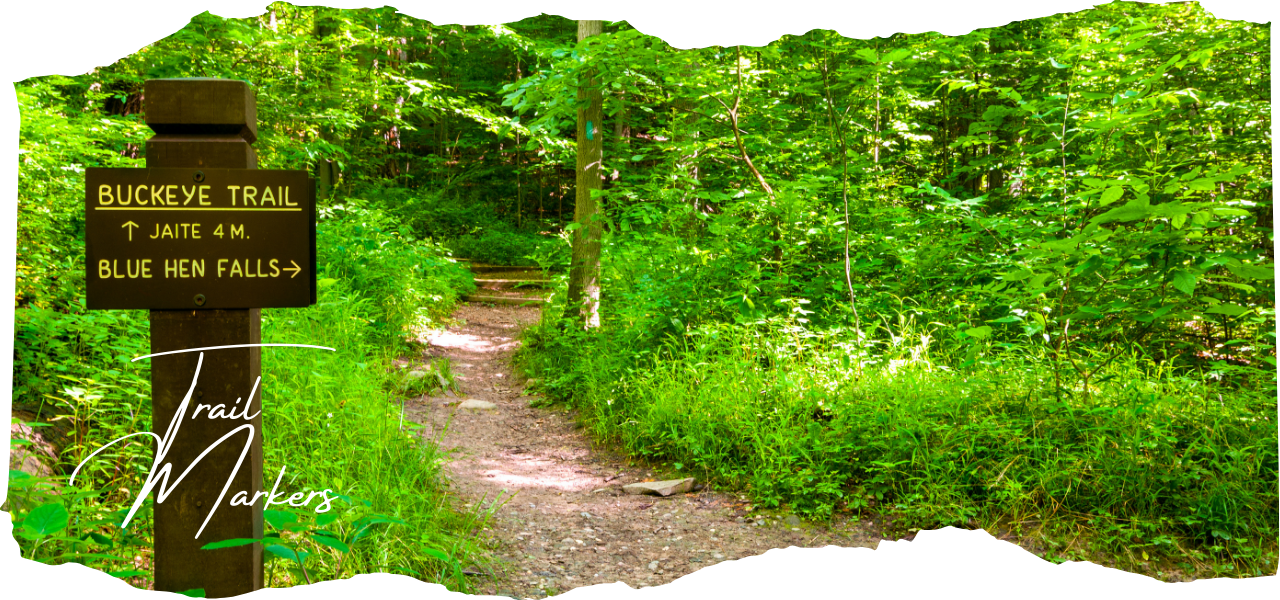
Imagine yourself setting out for a long hike to a mountain summit. Let’s say you don’t have any GPS tracking device and after 30 minutes or so on the same, flat terrain, you start to wonder if you are heading in the right direction.
What do you do? You’ll start to look for Trail Markers that confirm you are on the right path, and if you are especially fortunate, the markers might tell you how far you’ve gone and how much farther you have to reach the summit. This reassures and relaxes you so you can enjoy the journey.
Every marker you pass is a little reward letting you know you’re making progress toward your destination. You want to provide the same kind of markers of success for your learners.
The great part about writing these is you already know how (that is if you read the previous blog Getting to Waterfalls, Ice Cream, and Course Summit Destinations). They follow the same process.
Ask yourself: What does the learner need to be able to do at each of these Trail Markers? How can they demonstrate that in real actions? Write that down. Form a single destination statement for each Trail Marker.
I encourage you to stop right now and think of the course you wrote the summit destination for and draft Trail Markers for that. If you’d like a worksheet for forming these, check out the Summit-First Framework for Homeschooling Course where you can access the provided resources.
Next week, we answer the questions:
- “How do I know how much content to put in my course or unit study?”
- “How do I know what content to include and what to leave out?”
Do you want personal guidance?
Sign up for personal coaching by the hour or package where you get one-on-one guidance for your course creation needs.
Sign up for my mailing list below to know when new courses are available.